
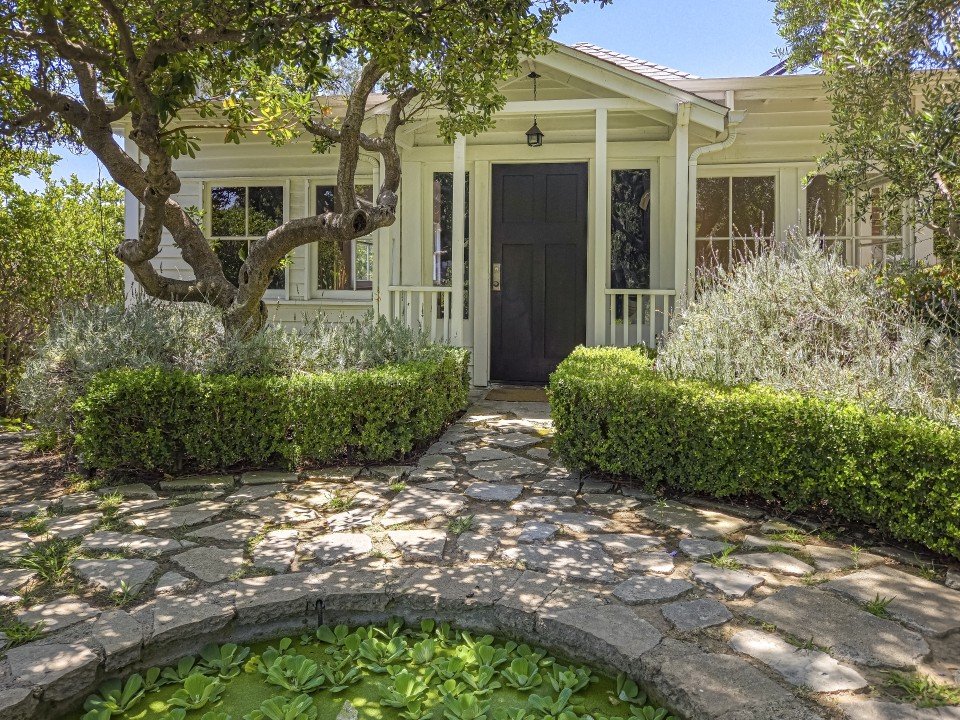
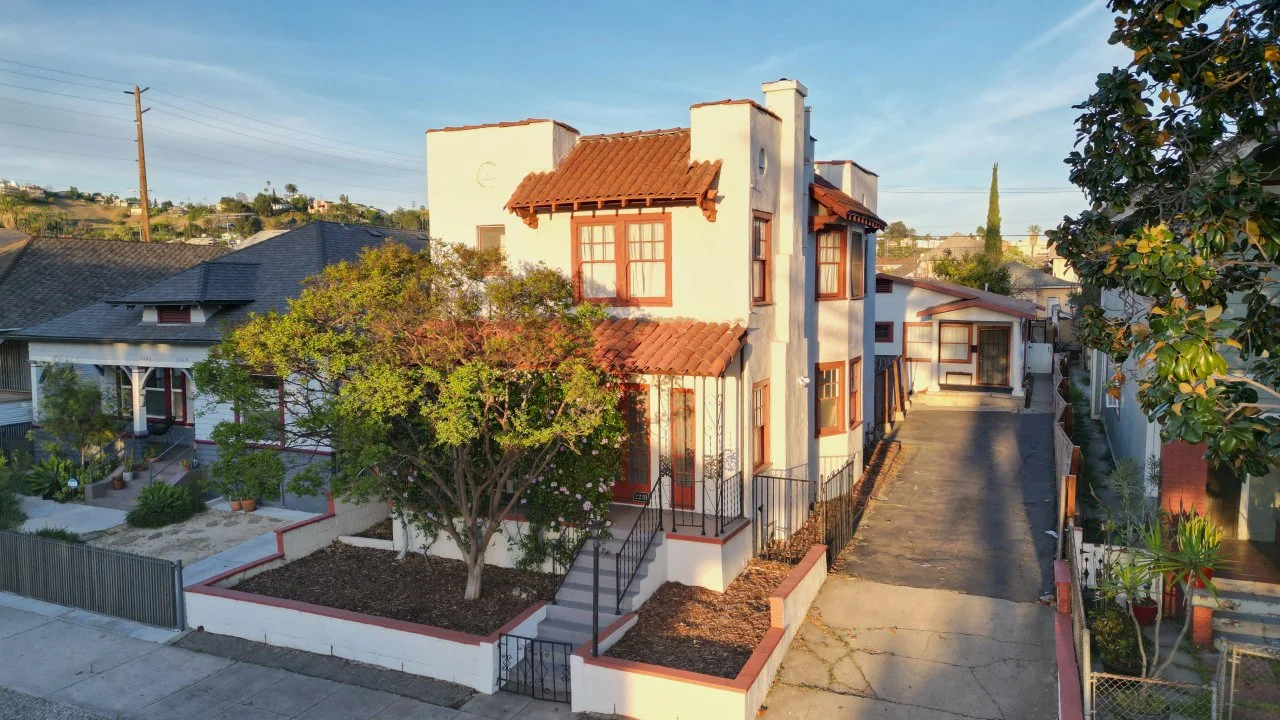
Incredible home in Silver Lake, Los Angeles features an open floor plan, two bedrooms and two additional spaces.
Los Angeles Uses NSP Funds to Create Jobs with Property Renovations
The city of Los Angeles is putting its Neighborhood Stabilization Program (NSP) funds to work with the launch of a new initiative to create jobs rehabilitating foreclosed properties in communities impacted by the housing crisis. City officials were joined by HUD in announcing the “Bridges to Business Success” initiative at the site of the program’s first construction project at14651 Novice Street, an NSP-acquired foreclosed property in Panorama City.
“Bridges to Business Success is an innovative approach to utilizing HUD’s Neighborhood Stabilization Program funding,” Ophelia Basgal, HUD’s regional administrator, told reporters.
“Not only is this program providing opportunities for small business development and job creation but it will also address the stabilization of neighborhoods hardest hit by foreclosures by rehabilitating vacant homes like this one here in Panorama City and those throughout the Los Angeles metro area,” Basgal said.
The Bridges to Business Success program is a public-private initiative providing small minority business owners with procurement training and contract opportunities to create and retain jobs.
The city of Los Angeles was awarded $143 million in NSP funds from HUD to address the negative impact of foreclosures, to stimulate the creation and retention of jobs, and to advance the stabilization of neighborhoods.
In partnership with Restore Neighborhoods LA, Inc., the Los Angeles Housing Department (LAHD) has acquired, rehabilitated, or developed over 780 units of housing and created or retained over 1,100 full-time and part-time jobs to date.
“It’s so rewarding and refreshing to be part of such a great revitalization effort,” said Dale McPherson, president of Field Asset Services. “LAHD and its partners have created a one-stop shop initiative that will restore one of the hardest-hit communities in the nation.”
More Homeowners Are Open to Strategic Default
A poll conducted by Housing Predictor says that 47 percent of those surveyed would intentionally stop paying their mortgage even if they could afford to pay in order to get out from under a depreciating investment. The number of mortgage borrowers open to strategic default has risen sharply since Housing Predictor last surveyed public opinion on the issue about a year-and-a-half ago. In that poll only 36 percent of homeowners participating said they would throw in the towel should housing prices continue to drop.
The foreclosure crisis, falling home prices, and lingering doubts that the value of homes will increase in the near future are contributing to these decisions.
Housing Predictor’s results are based on responses provided by 1,000 visitors to the company’s website.
Better Days Ahead as Spring Market begins
Despite the fact that key market indicators released in recent weeks have shown declines in home sales, anecdotal reports from real estate agents in the field suggest “better days are ahead for the industry,” according to commentary released Monday by the economic team at Wells Fargo Securities, LLC. Even builders – who’ve endured possibly the steepest drop-off in business over this downturn – are optimistic heading into the spring, the economists note.
As a result, Wells’ economic team has nudged its forecast for home sales slightly higher, as the spring selling season appears to have gotten off to a strong start.
“While employment conditions have clearly improved and consumer confidence and spending have risen, we remain concerned about the lack of real after-tax income growth.
That said, the anecdotal evidence is hard to dismiss,” the economists write.
Most real estate agents are reporting “significant gains in buyer interest and sales,” and these gains are organic rather than incentive induced, according to the Wells Fargo economic team.
Unfortunately, they note that conservative appraisals and tight mortgage underwriting continue to undermine a large number of deals, however, they “suspect that the undertow from these two hindrances will subside over the course of this year, as the fog surrounding shadow inventories lightens up a bit and more lenders come back to the market.”
Distressed transactions still make up a considerable portion of overall sales activity and will continue to pressure prices through at least the first half of 2012, they note in the report.
“We expect home prices to definitively bottom by the middle of this year, as the backlog of foreclosures finally begins [to] clear,” writes Wells Fargo’s economic team. “For properties not in foreclosure, prices have probably already bottomed, but should remain relatively low” given the competition from foreclosures.
21 Day short sale response from BofA - Wow
Bank of America is making changes to its short sale procedures and introducing an improved task flow within the short sale technology module from Equator, BofA’s short sale management platform of choice. The goal: to reduce the timeframe for a short sale decision to less than three weeks. Keep in mind the 3 week goal will begin after all documentation is submitted properly.
Equity Sales are up - Distressed Sales Down
In California, the sale of distressed properties slowed as equity sales picked up in February after two months of decline, the California Association of Realtors (C.A.R.) reported this week. “A lack of inventory in the bank-owned (REO) and short sale market was a contributing factor to the decline in share of distressed sales in February,” said C.A.R. President LeFrancis Arnold. “In fact, REO inventory declined 24 percent in February from the previous year, while short sale inventory dropped 17 percent during the same period.”
The share of distressed properties that sold statewide decreased to 48.9 percent in February, down from January’s 50.1 percent and from 55.2 percent a year ago in February 2011.
The share of REO sales was down in February and stood at 25.2 percent, a drop compared to January’s 25.9 percent and down from the 31.9 percent reported last year in February.
After seeing a two-month decline, equity sales increased in February, making up 51.1 percent of home sales.
Based on signed contracts, C.A.R.‘s Pending Home Sales Index went up from a revised 102.3 in January to 127.8 in February. The index also was up from the 111.8 index recorded February 2011. This is the 10th month in a row pending sales were higher than the previous year.
Auto Loan and Credit Cards Paid Before Mortgage, according to TransUnion
According to TransUnion, in 2011 customers who have a minimum of one open auto loan, bankcard and mortgage are more likely to keep up with payments on the auto loan, bankcard then the mortgage. This is a reversal in payment patterns that signifies a change in priorities motivated by loss of equity. The credit card priority has been consistent for four years now but this is the first year that auto topped the priority list.
The analysis looked at a sample of approximately 4 million consumers in each quarter of 2011 and found that 39.1 percent were delinquent on a mortgage while current on their auto loans and credit cards.
Becker said, “A few reasons why auto loans have become the preferred payment to make include the need for an auto to get to work or look for employment, and the fact that an auto loan is not a revolving loan – the impact of repossession is greater than the loss of a credit card.”
“This preference for prioritizing auto loans before credit cards and mortgages was seen in all 50 states throughout 2011.
Matt Komos, a co-author of the study and TransUnion consultant, said, “It appears that the shift back to prioritizing mortgage payments ahead of credit cards – or auto loans – may only occur once the housing market has stabilized and begins its recovery and the unemployment situation shows significant improvement”.